Thin vs Thick Cigars: How Ring Gauge Affects Flavor
Posted:July 20, 2025
AGE VERIFICATION
The products available on Element Vape are age-restricted and intended
for adults of legal smoking age only. All orders placed on the website will
be verified by an industry leading Age Verification software for validation.
By entering our website, you affirm that you are of legal smoking age in your
jurisdication and you agree to be Age Verified.
When it comes to cigars, size isn’t everything — especially when you're talking about flavor. One of the most overlooked aspects of a cigar’s character is its wrapper geometry — specifically, how the thickness of a cigar affects the flavor delivery. Many smokers assume that a larger ring gauge means more power, more flavor, more everything. But here’s the twist: the wrapper leaf contributes the majority of a cigar’s flavor, and the thinner the cigar, the more wrapper you taste in every draw. Bigger cigars might look impressive, but thinner vitolas like lanceros, panatelas, and coronas offer a purer expression of the wrapper’s profile — making them a favorite among cigar makers and seasoned smokers alike.
What Is The Cigar Wrapper and Why Does It Matter?
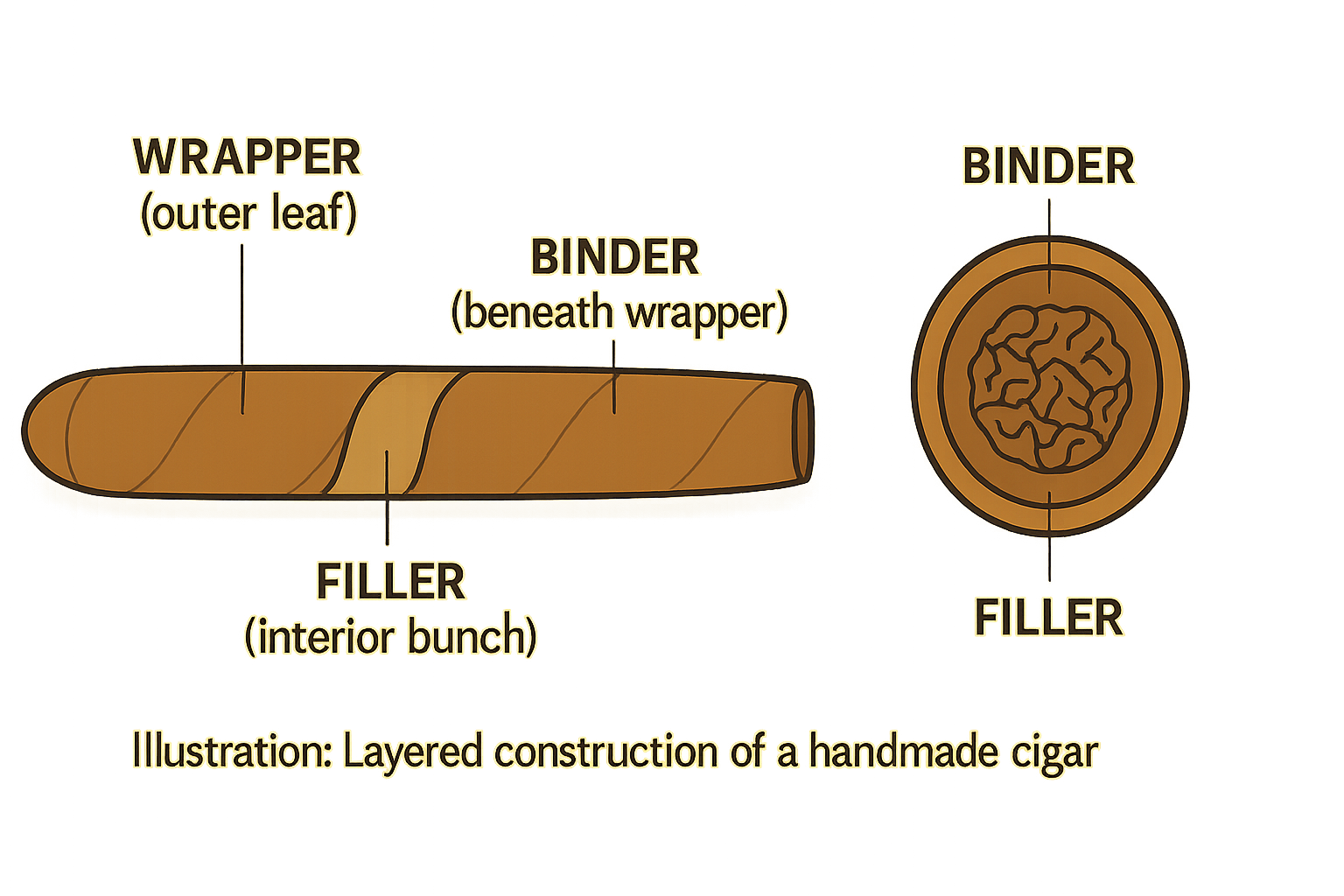
The wrapper is the outer layer of a cigar — it’s what you see, what you feel in your hand, and what your lips and tongue taste with every puff. While it might seem like the wrapper’s main job is to make the cigar look good, it actually does much more than that. In fact, the wrapper is one of the most important parts of the cigar when it comes to flavor.
Many cigar makers say the wrapper contributes 60% to 80% of a cigar’s overall taste. That’s because it’s the first leaf your smoke passes through on the way to your palate. And since wrapper tobacco is grown and processed with extra care — often under shade to develop smoother texture and richer oils — it tends to carry complex, flavorful characteristics. Think earthy notes, sweetness, spice, or creaminess — much of that comes from the wrapper.
This is also why thinner cigars tend to deliver more of the wrapper’s flavor. With less filler tobacco inside, there’s less interference and more wrapper in each draw. It’s a more direct expression of what that outer leaf has to offer.
A high-quality wrapper should also be clean, smooth, and flawless. Big veins, holes, cracks, or tears can lead to a tight draw, an uneven burn, or even ruin the cigar completely. Great cigars start with great wrappers — ones that look elegant, feel silky, and burn evenly from start to finish.
PROTIP: If a wrapper that you want to try is available in a cigarillo format, I would recommend those as they have the best overall ratio of wrapper to filler.
The Wrapper-to-Filler Ratio
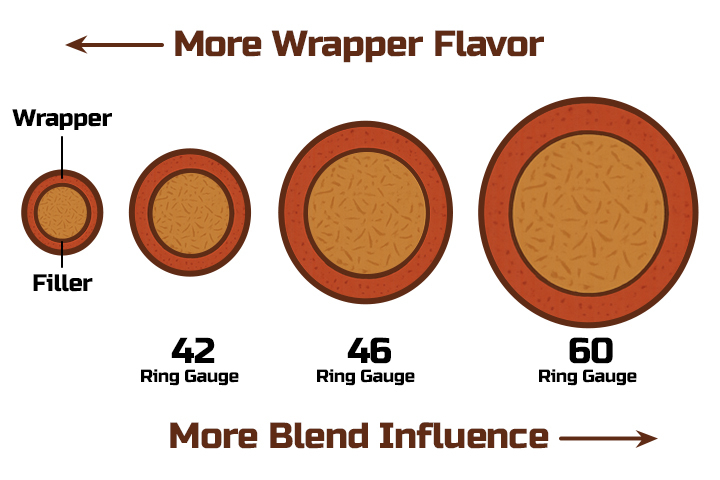
To really understand how a cigar delivers flavor, you need to look at the wrapper-to-filler ratio — a simple but powerful concept. This ratio describes how much of the cigar’s body is made up of wrapper leaf versus filler tobacco inside. The more wrapper you taste in each puff, the more influence it has on the cigar’s overall flavor.
In thinner cigars — like lanceros, panatelas, and coronas — there’s less filler packed inside, which means the wrapper makes up a larger percentage of what you’re tasting. Since the wrapper is typically the most flavorful and carefully processed part of the cigar, this results in a more direct, concentrated expression of its character. If the wrapper is spicy, earthy, or creamy, a thinner cigar will let you taste that clearly, with less interference from the blend inside. One good example of this would be the Romeo Y Julieta Reserva Porto Real Lanceros.
On the flip side, thicker cigars — like robustos, toros, or 6x60 gordos — have more filler tobacco, and that added bulk can mute or balance out the wrapper’s contribution. The flavor becomes a blend of the wrapper, binder, and filler together. That’s not a bad thing — thicker cigars are often blended to be more complex or mellowed out — but you’re getting less pure wrapper flavor in each draw. One example would be the Alec & Bradley Kintsugi Gordo Cigars.
PROTIP: To really understand a wrapper, start with a thinner vitola. A lancero, panatela, or corona can act like a “flavor magnifier” for the wrapper, letting you experience its full profile with minimal influence from the filler. Once you’ve dialed in the taste of the wrapper on its own, you can try that same blend in thicker sizes to appreciate how the extra filler changes the experience — often adding body, complexity, or a longer burn time.
Flavor Expressions in Thin vs. Thick Cigars
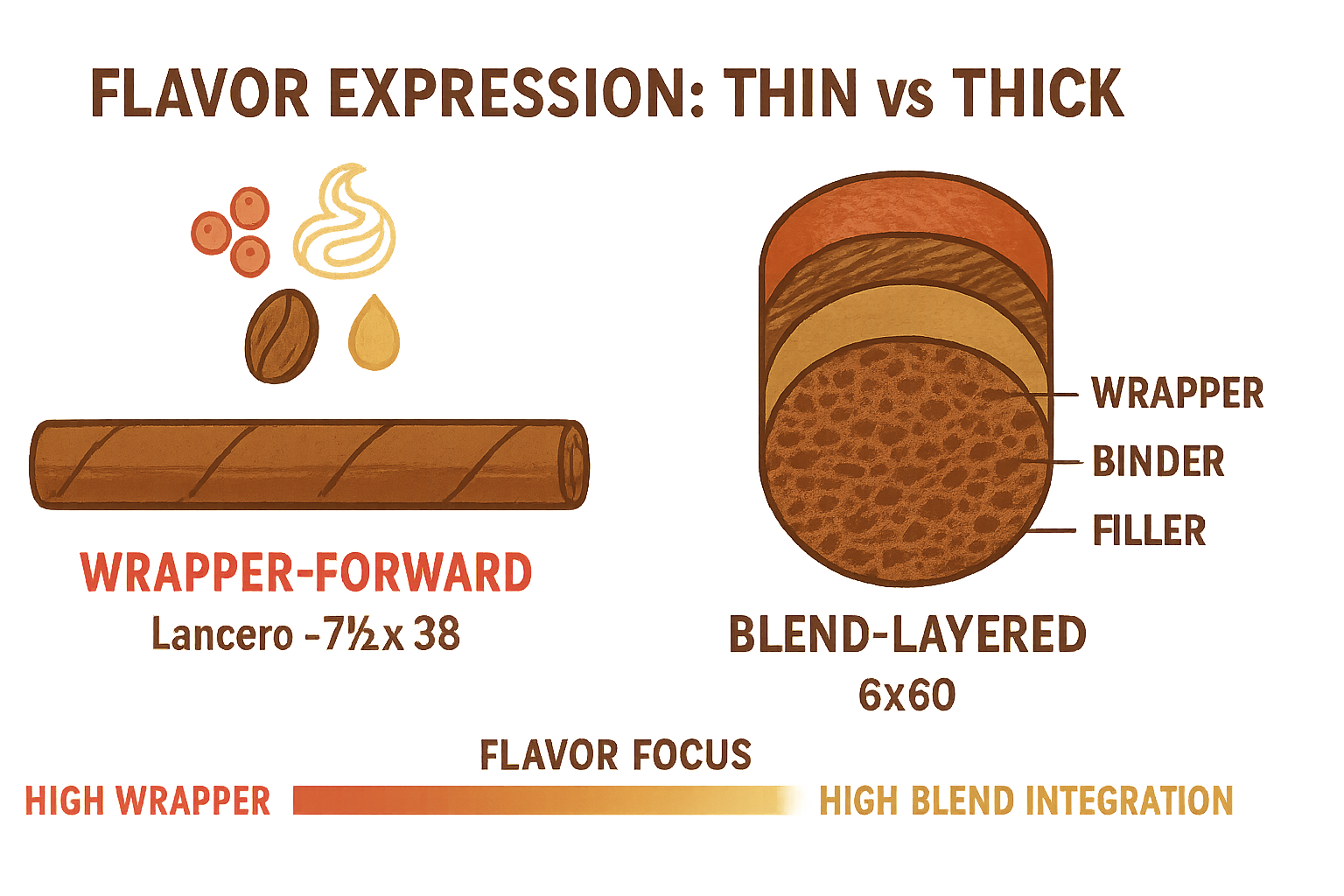
Ring gauge isn’t just about how thick a cigar looks in your hand — it also shapes what you taste. Because the wrapper carries so much of a cigar’s flavor, thinner ring gauges,like the Rocky Patel Vintage 1999 Mini Torpedos, with a higher wrapper-to-filler ratio deliver a more wrapper-forward profile. Expect that leaf’s signature notes — creaminess, spice, sweetness, chocolate, earth, whatever it’s known for — to show up earlier and more prominently in the smoke. Draws often feel sharper and more focused because there’s less filler tobacco competing for your palate.
Thicker cigars, like the My Father Flor De Las Antillas Maduro Toro Gordo Cigars, by contrast, give the blender (and the torcedor who rolls it) more interior space to combine multiple filler leaves in varied proportions. That extra room can build layering and transitions as the cigar warms — sweetness against pepper, earth against cocoa, strength rising in the final third. The tradeoff is that all that filler can soften, balance, or partially drown out the wrapper’s distinct voice, so the same blend may be perceived as milder in flavor intensity, even when the recipe is identical in a thinner size.
How Size Changes the Smoking Experience
Flavor Intensity: Thinner = more wrapper, more concentrated wrapper taste. Thicker = more filler influence, blended profile.
Complexity Curve: Thick cigars often “evolve” in thirds as different fillers heat up. Thin cigars can be more linear but purer.
Burn Temperature & Smoke Density: Larger ring gauges usually burn cooler and produce more smoke volume; thinner sizes can burn a bit hotter if puffed aggressively — so slow your cadence.
Strength Perception: A blend may feel stronger in a thinner format because the wrapper’s oils and fermentation character hit your palate more directly.
Why Bigger Isn't Always Bolder
Waltz into any humidor, chances are, your eyes go straight to the big-ring beasts - 6x60s, fat toros, and jaw-breaker gordos. Freudian thoughts aside, these cigars look powerful and potent, with some thinking that since there is more tobacco, its gotta be stronger. This is a misconception as palate and appearance are not the same thing. Rather, a large ring cigar helps deliver a more cooler, rounder, and more blended experience, not necessarily a stronger or more flavorful one.
Choosing the Right Format for Wrapper Exploration
Now that you understand how ring gauges help shape flavor, how can we use that knowledge when buying or smoking cigars. Start thinking with your goal in mind: Are you trying to taste the wrapper, explore the full blend, or settle in for a long, evolving smoke. Different vitolas can help you achieve your goal. To get some more insight on wrapper colors, sizes, and colors, check out our blog. Check out the table below to get an idea when selecting your next cigar.
*Wrapper Impact = how prominently the wrapper’s flavor shows up per puff, relative to filler.
Format
Approx Ring Gauge
Wrapper Impact
Blend Complexity
Session Length
Best If You Want…
Thin
~34–42
High
Low–Med
Short–Med
Study the wrapper’s flavor; minimal filler interference.
Mid
~44–54
Balanced
Med–High
Med
Taste both wrapper and filler; great “everyday” comparison size.
These vitolas are thin and lower the wrapper-to-filler ratio considerably.
Lancero (≈38 ring) – The classic wrapper showcase. Demands proper construction; rewards careful smoking with concentrated flavor.
Panatela / Petite Panatela – Quick, flavor-forward session; great for comparing wrappers across brands.
Corona / Petite Corona – Accessible, widely available, still wrapper-driven but a touch more forgiving on burn than ultra-thins.
When to Step Up in Size
Once you’ve mapped the wrapper’s signature notes in a thin format, try the same blend in:
Robusto to see how added filler rounds and balances the profile.
Toro for a longer burn and more temperature-driven transitions.
6x60+ if you’re curious how far complexity can stretch—and how much the wrapper recedes.
If you're a more seasoned cigar aficionado, please let us know which vitola was able to help you understand a wrapper's flavor - lancero, corona, or something else? Drop your pick, and your best cigar dad joke in the comments below. If you haven't smoked any cigars, you can see our blog on "How To Choose Your First Cigar".




 Uwell
Uwell RAZ
RAZ SMOK
SMOK Geek Vape
 Vaporesso
 Geek Vape
 SMOK
SMOK UWELL
UWELL
 FOGER
FOGER Lost Mary
 FASTA Vapes
 Fifty Bar
 Juice Head E-Liquid
 Pod Juice
 Monster Vape Labs
 Naked 100



 Lost THC
 Flying Monkey
 BOUTIQ
 ELF THC


 YoCan
YoCan Lookah
 Dr. Dabber
 PuffCo
 OEO
OEO NIQ
NIQ VELO
VELO MELTA
MELTA
 MJ Arsenal
 Puffco
 GRAV Labs
 EYCE
EYCE
 Cohiba
 Arturo Fuente
 Davidoff
 My Father
 Nitecore
 Hohm Tech
 UWELL
UWELL LUCY
LUCY