Cigar Storage: Should You Keep Cellophane On or Remove It?
Posted:August 10, 2025
AGE VERIFICATION
The products available on Element Vape are age-restricted and intended
for adults of legal smoking age only. All orders placed on the website will
be verified by an industry leading Age Verification software for validation.
By entering our website, you affirm that you are of legal smoking age in your
jurisdication and you agree to be Age Verified.
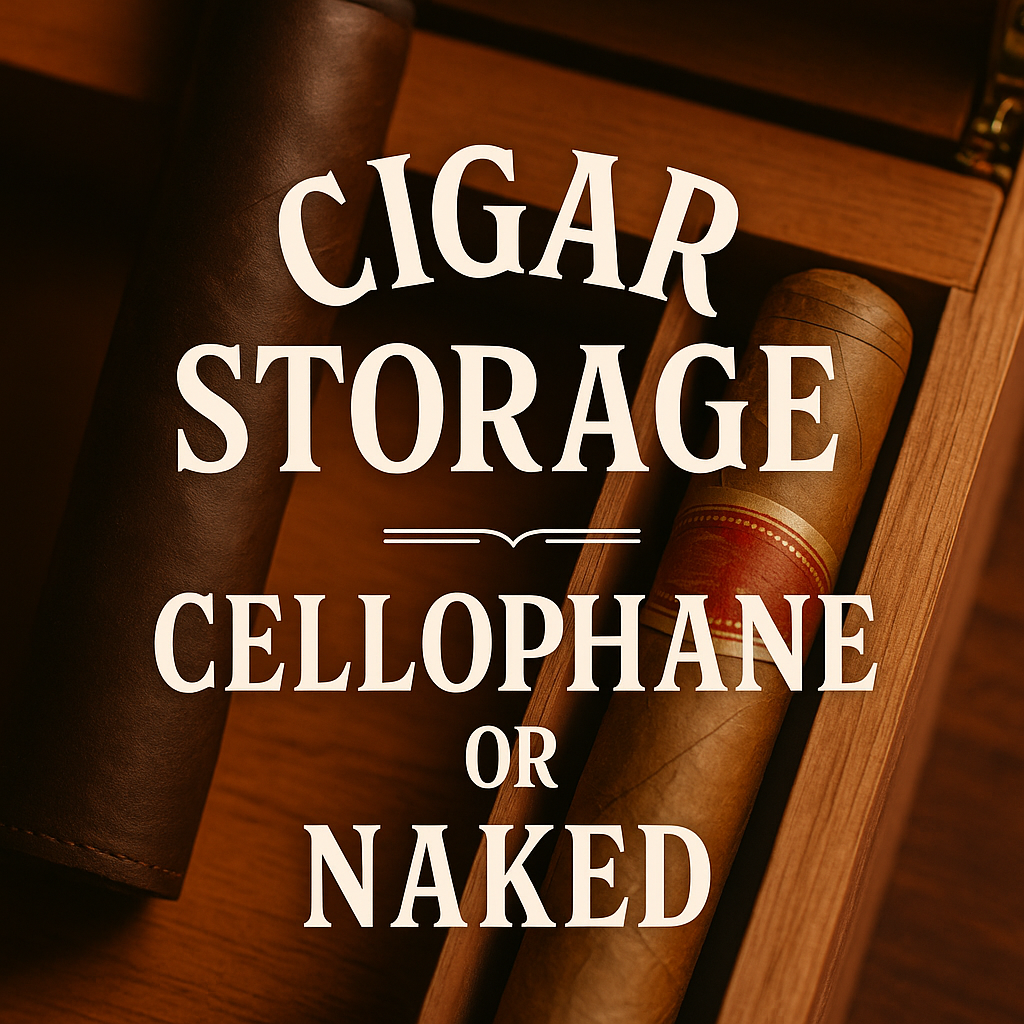
In the world of premium cigars, few debates are as quietly passionate as the question of cellophane: should you leave it on, or strip it off before storage? Some swear by the added protection, others claim it robs a cigar of its true aging potential. The truth is, both sides have compelling arguments—especially when you consider how storage environment, aging goals, and personal smoking habits intersect.
What is Cigar Cellophane?
Cigar Cellophane is a thin transparent film that is made from regenerated cellulose, a natural plant fiber made from wood pulp or cotton. Despite it sounding, handling, and looking like plastic, it is not. Cellophane has quite a few interesting characteristics that make it ideal for cigar storage. Check out the table below to see the characteristics of cellophane and how it relates to modern cigar packaging.
Cigar Storage: Cellophane or Naked — Key Properties of Cellophane
Property
What it means for cigars
Transparency
Lets you clearly see the cigar’s wrapper and condition without unwrapping.
Breathability
Allows limited air and moisture transfer, so cigars can remain sleeved in a humidor and still “breathe.”
Moisture resistance
Resists minor humidity swings; coatings (e.g., nitrocellulose/wax) can improve water resistance without sealing the cigar airtight.
Biodegradability
Made from regenerated cellulose (plant-based), so it’s biodegradable—unlike most petroleum plastics.
Strength & flexibility
Durable enough to protect the wrapper from scuffs and handling while remaining easy to slide on/off.
Those benefits aren’t just perks—they directly influence how well your cigars handle storage. Cellophane acts like a gentle buffer between your cigar and the outside world, slowing down shifts in humidity and protecting the wrapper from accidental scuffs or tears.
Personally, living in Southern California, I’ve experienced how tricky humidor management can be. I can dial in the humidity, but temperatures often creep above 75°F, especially in summer. To offset this, I keep humidity slightly lower, but even then, those fluctuations aren’t ideal for long-term cigar health. That’s why I keep my cigars in their cellophane sleeves—giving them that extra layer of protection from these unpredictable swings.
While cellophane will never replace the need for precise climate control, it can quietly add stability and safety—especially when storage conditions aren’t perfectly consistent. The semi-permeable nature of cellophane creates a microclimate inside, buffering against the inconsistencies.
PROS AND CONS OF CELLOPHANE OR NAKED STORAGE
While the initial benefits of cellophane are easy to appreciate, the bigger question is whether those same benefits outweigh the drawbacks—especially over long-term storage. Below is a direct comparison of both approaches.
Cigar Storage: Cellophane vs. Naked — Pros and Cons
Factor
Cellophane
Naked (No Sleeve)
Protection
Shields wrapper from scuffs, cracks, and handling damage during storage or transport.
Wrapper more vulnerable to nicks, scratches, and handling marks.
Aging & Flavor Exchange
Slows flavor exchange between cigars; good for keeping blends distinct.
Encourages faster flavor mingling between cigars in the same humidor.
Humidity Interaction
Breathable — allows humidity to pass through slowly, maintaining stability.
Fully exposed to humidor environment; reacts more quickly to changes.
Presentation
Gives a clean, professional retail look while still showcasing the cigar.
More “old-world” and traditional appearance; direct tactile feel.
Hygiene
Reduces direct contact with hands, dust, and contaminants.
More susceptible to contamination from handling and airborne particles.
As you can see, the “with cellophane” column leans heavily toward physical protection and stability, making it ideal for those who move cigars often or store them in mixed conditions. On the other hand, “without cellophane” enthusiasts point to improved air circulation and flavor mingling—advantages that become more relevant if you’re aging cigars in a stable, controlled environment.
The decision often comes down to your priorities: maximum protection and consistency, or maximum interaction with the humidor environment. There’s no universally “right” answer—only what’s right for your collection. For some, the slow yellowing of cellophane over time is more than just a cosmetic change—it’s a subtle, visual marker of aging, signaling that the cigar has been resting and maturing in the humidor for years. While this golden hue can be a point of pride for collectors, it’s worth remembering that color alone doesn’t guarantee superior flavor—it simply tells part of the cigar’s story. Still, I’ll admit—when I see that amber-tinted cellophane, my mouth starts to water, because more often than not, it means I’m in for a truly tasty treat.
While both approaches have merit, personal preference often comes down to the environment you’re storing cigars in—and your own priorities as a collector. In my case, living in Southern California means contending with warm summers and occasional temperature spikes above 75°F, even inside a well-maintained humidor. That’s one reason I keep my cigars in their cellophane sleeves. The cellophane acts as a subtle buffer against those fluctuations while also providing an added layer of hygiene, letting me handle each cigar without touching the wrapper directly. I’ve also heard credible stories of cellophane slowing, or even halting, the spread of mold in a collection—another reason I’m reluctant to remove it. When it comes to trading, that same barrier gives me greater confidence. I rarely accept naked cigars in a swap—unless, of course, it’s an Arturo Fuente OpusX Pussycat. For one of those, I’m still very much on the hunt.
The Final Puff
At the end of the day, cigar storage is as much personal philosophy as it is science. Whether you keep your sticks sleeved for that extra layer of protection or let them breathe freely in the humidor, the choice reflects your priorities, habits, and environment. Now I’d love to hear from you—do you store your cigars in their cellophane, or go naked? More importantly, why? Share your approach in the comments below and let’s keep this conversation—and our cigars—aging beautifully.




 Uwell
Uwell RAZ
RAZ SMOK
SMOK Geek Vape
 Vaporesso
 Geek Vape
 SMOK
SMOK UWELL
UWELL


 FOGER
FOGER Lost Mary
 FASTA Vapes
 Fifty Bar
 Juice Head E-Liquid
 Pod Juice
 Monster Vape Labs
 Naked 100



 Lost THC
 Flying Monkey
 BOUTIQ
 ELF THC


 YoCan
YoCan Lookah
 Dr. Dabber
 PuffCo
 OEO
OEO NIQ
NIQ VELO
VELO MELTA
MELTA

 MJ Arsenal
 Puffco
 GRAV Labs
 EYCE
EYCE

 Cohiba
 Arturo Fuente
 Davidoff
 My Father


 Nitecore
 Hohm Tech
 UWELL
UWELL LUCY
LUCY